

The options for treatment-resistant OCD include advanced medication strategies, innovative neuromodulation techniques like Exomind Transcranial Magnetic Stimulation (TMS), and emerging therapies, such as Spravato (esketamine). When standard treatments for obsessive-compulsive disorder (OCD) do not bring the relief you need, exploring these advanced approaches can offer hope and new pathways to wellness.
This guide will walk you through the landscape of advanced OCD treatment, explaining the methods and technologies that can help you regain control and find peace.
Obsessive-compulsive disorder is a mental health condition characterized by two core components: obsessions and compulsions.
Obsessions: These are persistent, unwanted, and intrusive thoughts, images, or urges that cause significant anxiety and distress. Common obsessions revolve around themes of contamination, harm, order, or taboo thoughts.
Compulsions: These are repetitive behaviors or mental acts that an individual feels driven to perform in response to an obsession. The goal of a compulsion is to reduce the anxiety caused by the obsession or to prevent a dreaded event from happening. Examples include excessive hand-washing, checking, counting, or mental rituals.
The cycle of obsessions and compulsions can consume hours of a person’s day, disrupting work, relationships, and overall quality of life. While many people experience mild obsessive thoughts or compulsive habits, for a diagnosis of OCD, these symptoms must be time-consuming and cause major distress or impairment.
The term “treatment-resistant OCD” (TR-OCD) is used when a person has not experienced a satisfactory improvement in their symptoms after trying standard, evidence-based treatments. Generally, this means a patient has completed adequate trials of at least two first-line therapies without significant relief. These therapies usually include cognitive-behavioral therapy (CBT), exposure and response prevention (ERP), and medication.
When first-line treatments prove insufficient, your provider has a deep well of alternative and add-on strategies to draw from. The goal shifts from finding a single “magic bullet” to building a personalized, multi-faceted treatment plan.
If SSRIs alone don’t work, the next step in medication management is often to try a different class of drug or to augment the current medication with another agent.
Clomipramine is a tricyclic antidepressant (TCA) and was one of the first medications shown to be highly effective for OCD. It is a powerful serotonergic agent, but it often comes with more side effects than the newer SSRIs. For this reason, it is typically considered a second-line option for patients who have not responded to multiple SSRIs.
Serotonin-norepinephrine reuptake inhibitors (SNRIs), such as venlafaxine, are another class of antidepressants that may be tried. They affect both serotonin and norepinephrine and can sometimes be effective when SSRIs are not.
In some cases, a psychiatrist may recommend augmenting an SSRI with another medication to boost its effectiveness. This is a common strategy in treatment-resistant cases.
Adding a low dose of an atypical antipsychotic (also known as a second-generation antipsychotic) to an SSRI is one of the most common and evidence-based augmentation strategies for TR-OCD. These medications act on dopamine receptors and can help reduce the intensity of obsessive thoughts and compulsive urges in some individuals.
A growing body of research is exploring the role of the neurotransmitter glutamate in OCD. Medications that modulate the glutamate system are being investigated as potential treatments. This line of inquiry has led to some of the most innovative new therapies, including ketamine.
For individuals who have not responded to standard ERP, a therapist may recommend a more intensive or modified version of the therapy. This could involve more frequent sessions, longer exposure exercises, or incorporating principles from other therapeutic models like Acceptance and Commitment Therapy (ACT). ACT focuses on accepting unwanted thoughts without judgment and committing to actions aligned with personal values, which can be a powerful complement to ERP.
Transcranial Magnetic Stimulation is a non-invasive procedure that uses magnetic fields to stimulate nerve cells in the brain. It is FDA-cleared for the treatment of both major depressive disorder and OCD.
At Sunshine Psychiatric Care and Wellness, we use an advanced TMS system. During a session, a magnetic coil is placed over a specific area of the patient’s scalp. The device delivers targeted magnetic pulses that can either excite or inhibit activity in the underlying brain regions implicated in OCD. For OCD treatment, the stimulation protocol is specifically designed to target the neural circuits connecting the prefrontal cortex and deeper brain structures involved in compulsive behaviors.
TMS is a drug-free, outpatient procedure performed right in our Palm Coast office. Patients are awake and comfortable during the session and can return to their daily activities immediately afterward. A typical course of treatment involves daily sessions for several weeks.
tDCS is another non-invasive neuromodulation technique being explored for OCD. It involves applying a weak, constant electrical current to the scalp through electrodes. The goal is to modulate the excitability of neurons in the targeted brain region. While tDCS is considered experimental for OCD and is less powerful than TMS, research is ongoing to determine its potential as a more accessible and portable treatment option.
The field of psychiatry is constantly evolving, with new research paving the way for groundbreaking treatments. These emerging therapies offer new hope for individuals who have felt stuck for years.
Researchers continue to investigate novel pharmacological targets for OCD beyond the serotonin system. This includes a strong focus on the glutamate system, as well as the immune system and its role in neuroinflammation. As our understanding of the neurobiology of OCD deepens, more targeted and effective medications will likely become available.
One of the most significant breakthroughs in recent psychiatric medicine is the use of ketamine and its derivative, esketamine, for treatment-resistant mood and anxiety disorders. Unlike traditional antidepressants that can take weeks or months to work, ketamine acts rapidly on the brain’s glutamate system, promoting neuroplasticity – the brain’s ability to form new connections and rewire itself.
At Sunshine Psychiatric Care and Wellness, we offer Spravato (esketamine), an FDA-approved prescription nasal spray. While Spravato is currently FDA-approved for treatment-resistant depression and major depression with acute suicidal ideation, its mechanism of action holds promise for other difficult-to-treat conditions, and research into its use for OCD is active. Administered in our comfortable, medically supervised Palm Coast office, Spravato represents the cutting edge of psychiatric innovation, offering rapid relief for those who have lost hope.
With so many options available, navigating the path forward can feel overwhelming. The key is to work with a knowledgeable provider who can guide you through the process with a personalized approach.
There is no “one-size-fits-all” solution for treatment-resistant OCD. The right plan for you will depend on your specific symptom profile, treatment history, co-occurring conditions, and personal preferences. The process begins with a comprehensive psychiatric evaluation to fully understand your unique situation.
Our team works closely with each patient to develop a tailored strategy. This may involve optimizing medications, referring for specialized therapy, or integrating advanced treatments like Exomind TMS or Spravato. This holistic approach might also include supportive wellness services like our IV infusions or Biosound therapy to promote overall health and resilience during your treatment journey. Your progress is continuously monitored, and the plan is adjusted as needed to ensure you are on the possible path to recovery.
Living with treatment-resistant OCD can be incredibly challenging, but not responding to first-line treatments does not mean you’ve run out of options. Advances in psychiatric care – including medication optimization, specialized therapy, Transcranial Magnetic Stimulation (TMS), and emerging treatments like Spravato – are helping many people find meaningful relief. By working with an experienced mental health provider to create a personalized treatment plan, you can explore innovative therapies that address your unique needs and take the next step toward reclaiming your quality of life.
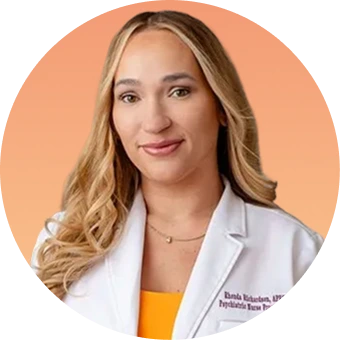
About the Author
Rhonda Richardson, PMHNP-BC