Hyperbaric Oxygen Therapy for PTSD & Depression is an emerging, supportive option that may ease some symptoms, especially when trauma and brain stress overlap. Early research suggests it can complement psychiatric care, but it is not a stand-alone cure. At Sunshine Psych Care in Palm Coast, we offer Mild Hyperbaric Oxygen Therapy as a wellness therapy that fits within a full mental health plan.This article explains how HBOT works, what the research says about PTSD and depression, who may be a good fit, and how the therapy fits alongside other treatments.
Understanding Hyperbaric Oxygen Therapy (HBOT)
What is Hyperbaric Oxygen Therapy?
Hyperbaric oxygen therapy, or HBOT, means breathing concentrated oxygen inside a pressurized chamber. “Hyperbaric” means higher than normal air pressure. That added pressure helps your body absorb more oxygen than it can at normal pressure.
Hospitals have used HBOT for decades for wound healing, decompression sickness in divers, and carbon monoxide poisoning. In recent years, researchers have begun studying how HBOT affects the brain, including mood, memory, and trauma.There are two main types of chambers:
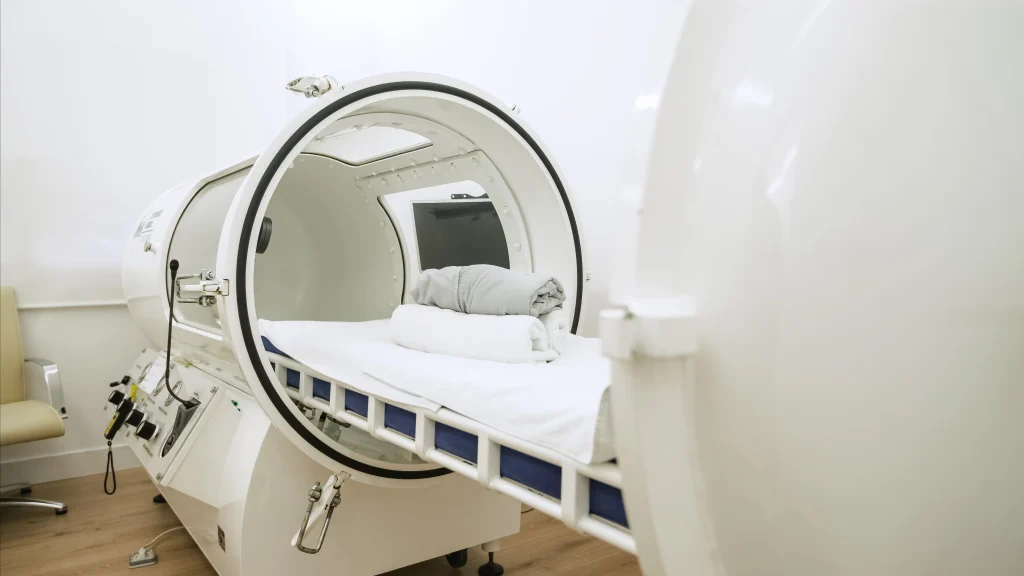
Hard-shell chambers reach higher pressures and are most often found in hospital and medical settings.
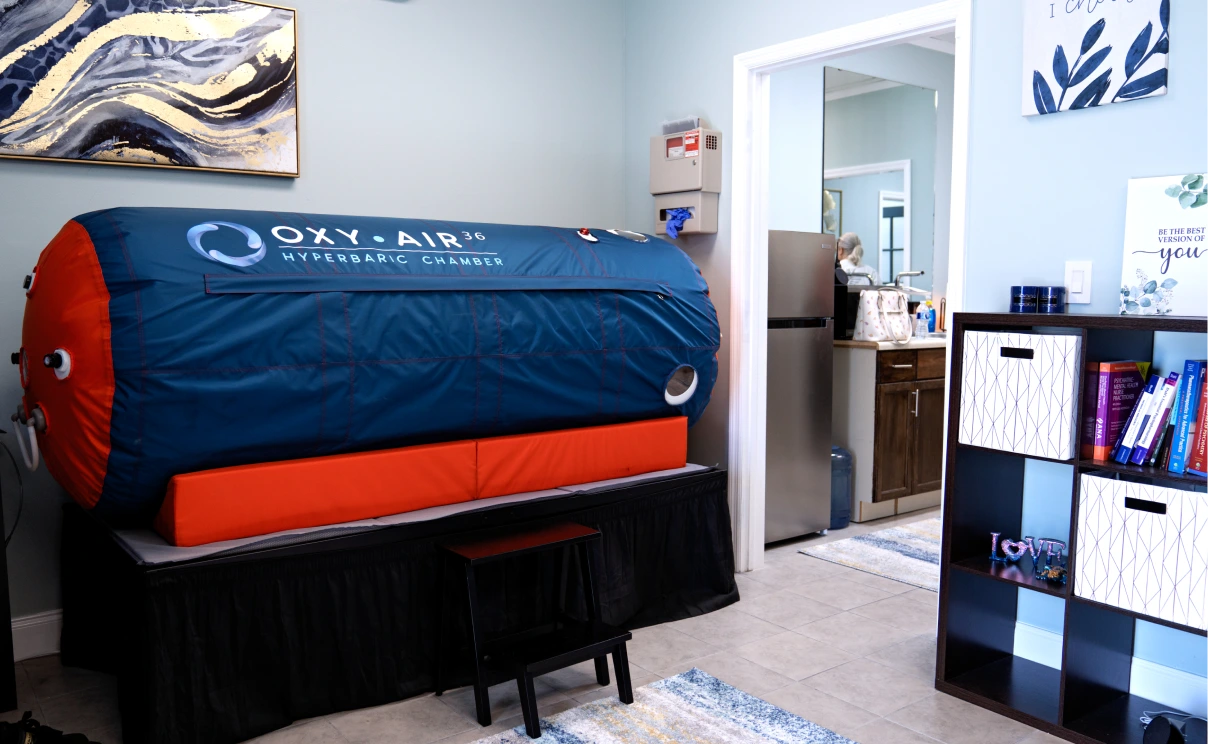
Soft chambers use a flexible, pressurized shell at lower pressure. This approach is called Mild Hyperbaric Oxygen Therapy, or mHBOT.
At Sunshine Psych Care, we offer Mild Hyperbaric Oxygen Therapy in a soft pressurized chamber as a gentle wellness therapy. It supports the brain and body but does not replace psychiatric treatment.
How Does HBOT Work?
Under normal conditions, red blood cells carry most of the oxygen in your blood. Inside a pressurized chamber, oxygen also dissolves directly into the plasma, allowing it to reach tissues more easily, including areas with reduced blood flow.Researchers believe several effects may matter for mental health:
More oxygen to brain tissue. Extra oxygen may support brain cells under stress.
Lower inflammation. Ongoing inflammation is linked to both depression and PTSD. HBOT may help calm inflammatory signals.
Support for new blood vessels. Repeated sessions may encourage the growth of small blood vessels in the brain.
Support for brain repair. Some studies suggest HBOT may affect stem cells and growth factors involved in healing.
Mitochondrial support. Better oxygen supply may help mitochondria work more efficiently.
Most of these effects are seen with repeated sessions over weeks, not after a single visit. Mild HBOT uses lower pressure than hospital chambers, so the effects may be gentler, and research on clinical HBOT does not transfer directly to mild HBOT.From a patient’s view, the experience is simple. You relax in the chamber and breathe concentrated oxygen while your body does the work. Many patients describe it as a calm, restful break in their day.During an mHBOT session, you relax while breathing concentrated oxygen that dissolves directly into your tissues to support healing at a cellular level.
HBOT for Mental Health Conditions
Treatments for PTSD and Depression
PTSD can develop after living through or witnessing a traumatic event. Symptoms include flashbacks, nightmares, avoidance, irritability, poor sleep, and feeling constantly on guard. Common treatments include trauma-focused talk therapy and medication. Many patients benefit from both.Depression affects how you feel, think, and manage daily life. It can bring ongoing sadness, low energy, poor focus, sleep changes, and loss of interest in things you once enjoyed. Standard care often includes therapy and antidepressant medication.These treatments help many people, but some do not get enough relief or struggle with side effects. That is why our team offers a wider range of options, including:
Neuro Reset™, which pairs Exomind TMS with IV Ketamine Therapy
IV Infusions
Mild Hyperbaric Oxygen Therapy
HBOT is one piece of that broader approach.
Why Consider HBOT for PTSD and Depression?
Interest in Hyperbaric Oxygen Therapy for PTSD & Depression has grown because both conditions involve real changes in the brain. Brain scans of people with PTSD and depression often show differences in blood flow and activity. Trauma and long-term stress can affect areas tied to memory, fear, and emotional control. HBOT targets the brain’s oxygen supply and repair processes, so researchers want to know if it can help those areas recover.Many patients look for options that do not add more medication. Some have tried several antidepressants with limited success. Others want a non-drug therapy to use alongside their current plan.PTSD and brain injury often overlap, especially for veterans, first responders, and people who have been in car accidents. HBOT has shown promise for brain injury symptoms, so researchers have asked whether it might also help the PTSD that often comes with them.HBOT is non-invasive. There are no needles and no surgery. For patients who feel worn down by their symptoms, a restful therapy can be appealing.
HBOT and PTSD
How HBOT Can Help PTSD
PTSD changes how the brain processes threat and stress. Areas tied to fear can become overactive, while areas that help calm fear and regulate emotions can become less active.
HBOT may help PTSD in several ways:
Improving blood flow to under-active areas. Some research has found better blood flow in brain regions linked to emotion and memory after a course of HBOT.
Reducing brain inflammation. Chronic stress keeps the body in a state of alert. HBOT may help calm the inflammation that comes with it.
Supporting brain plasticity. Plasticity is the brain’s ability to form new connections. Some researchers believe HBOT may make it easier for the brain to process traumatic memories.
Helping sleep and energy. Many patients report more restful sleep and less fatigue during a course of HBOT. Better sleep can ease PTSD symptoms on its own.
One theory is that HBOT may help the brain revisit and reprocess traumatic memories. In some studies, patients reported strong emotions or memories during treatment. This is one reason HBOT for PTSD works with mental health support in place. Having a psychiatric team involved means those experiences can be addressed safely.
Evidence and Research on HBOT for PTSD
Key Studies and Clinical Trials
Research on HBOT for PTSD is still young, but it is growing. Much of it has focused on veterans, many of whom have both PTSD and lingering symptoms from mild traumatic brain injury.Several small randomized clinical trials have compared HBOT with a placebo or a control group. In some of these trials, patients who received HBOT showed greater improvement in PTSD symptom scores. Some also showed improvement in memory, attention, and mood.Brain imaging has added to the picture. Some studies used scans to measure brain activity and blood flow before and after treatment. These scans showed changes in regions tied to emotional processing and memory. The changes matched improvements in symptoms.More recent research has looked at veterans with PTSD who did not respond to standard treatment. Some of these trials also reported meaningful symptom relief after a full HBOT course.
Effectiveness of HBOT for PTSD Symptoms
The results so far are encouraging, but they come with important limits.What looks promising:
Improvements in core PTSD symptoms, such as intrusive memories, avoidance, and hyperarousal
Better sleep and lower fatigue
Gains in focus, memory, and thinking speed
Benefits that, in some studies, lasted for months after treatment ended
What remains uncertain:
Most studies have been small.
Many trials used hospital chambers at higher pressure, often for 40 or more sessions.
Some studies did not fully rule out a placebo effect.
Most participants were veterans with brain injury, so results may differ for other groups.
HBOT is not an approved treatment for PTSD.
This matters for anyone considering mild HBOT. Mild HBOT uses lower pressure than most of the research. It may still offer wellness benefits, such as better rest, more energy, and clearer thinking. It should not, however, be viewed as a proven PTSD treatment on its own.We share this openly because honest expectations lead to better decisions. Our team views mild HBOT as a supportive therapy within a full treatment plan.
HBOT, PTSD, and Veterans Affairs
Veterans have shaped much of the conversation about HBOT and PTSD. Combat exposure, blast injuries, and repeated trauma often lead to a mix of PTSD and brain injury symptoms. These symptoms can be hard to treat with medication and therapy alone.Because of this, veterans’ health programs and military research groups have taken a close interest in HBOT. Several research efforts have studied it for service members with PTSD and brain injury. Veteran advocacy groups have also pushed for more access and more research.For veterans in our area, this history is useful context. It shows that HBOT for PTSD is a serious research topic, not a passing trend. It also shows that the questions are not fully answered yet.If you are a veteran exploring HBOT, it helps to think about your whole picture. That includes your trauma history, any head injuries, your sleep, your current medications, and other care you receive. Rhonda Richardson, Psychiatrist, can review that full history with you and help you decide whether mild HBOT fits your goals and how it might work alongside your existing care.
Patient Experiences with HBOT for PTSD
Every patient’s experience is different, but some common themes come up when people describe a course of HBOT.Relaxation during sessions. Many patients find the chamber calming. It gives them a quiet block of time to rest without distractions. For people with PTSD who rarely feel at ease, that alone can be meaningful.Better sleep. Some patients notice deeper or more restful sleep as sessions continue. Since nightmares and poor sleep are central to PTSD, this change can affect the whole day.More energy and clearer thinking. Patients often describe less mental fog. They report feeling more alert and better able to focus.Emotional moments. Some people feel strong emotions during or after sessions. Memories may surface. This is one reason we keep HBOT connected to psychiatric care rather than offering it in isolation.Gradual change. Benefits usually build over a series of sessions. Most patients do not notice dramatic change after one visit.Patients can read about others’ experiences with our office on our Testimonials.
HBOT and Depression
Potential Benefits of HBOT for Depression
Depression affects the brain and body in ways that HBOT may influence. Researchers have looked at several possible benefits:
Lower inflammation. Many people with depression have higher levels of inflammatory markers. HBOT may help reduce inflammation, which could support mood.
Better brain energy. Depression often brings mental and physical exhaustion. By supporting oxygen delivery and mitochondria, HBOT may help with low energy.
Clearer thinking. Poor focus and mental cloudiness are common in depression. Some patients report sharper thinking during a course of HBOT.
Support for brain growth factors. Some research suggests HBOT may raise levels of proteins that help brain cells grow and connect. Lower levels of these proteins are linked to depression.
Improved sleep. Better sleep can lift mood and energy.
The practice video above captures this well. If you constantly feel exhausted or struggle to focus, your brain and body may need more oxygen to heal. Mild HBOT is designed to help clear mental cloudiness and support recovery at a cellular level.
Current Research on HBOT for Depression
Research on HBOT for depression is earlier than research on PTSD. Most studies have looked at depression that occurs alongside another condition.Some of the most studied areas include:
Depression after stroke. Several trials have found that adding HBOT to standard care improved mood scores in patients recovering from stroke.
Depression with brain injury. Studies of brain injury patients have often reported improvements in mood alongside gains in thinking and memory.
Depression with chronic pain. Trials in conditions such as fibromyalgia have reported improvements in pain, fatigue, and mood.
Animal research. Lab studies suggest HBOT may reduce brain inflammation and support brain cell growth in ways linked to mood.
There is less research on HBOT for major depression without another medical condition. That gap is important. It means we cannot yet say HBOT treats depression on its own.What the research does support is this: HBOT may help some of the biological factors tied to depression. These include inflammation, fatigue, and poor brain energy. For that reason, our team views mild HBOT as a possible complement to proven depression treatments. Those treatments include medication management, Spravato Esketamine, and Exomind TMS.HBOT is generally well tolerated, especially at the lower pressures used in mild HBOT. Still, it is not right for everyone, and some side effects can occur.Common and mild effects:
Ear pressure. You may feel pressure in your ears, much like during a plane landing. Swallowing or yawning usually helps.
Sinus discomfort. People with congestion may feel pressure in their sinuses.
Tiredness. Some patients feel tired or relaxed after a session.
Feeling closed in. Some people feel uneasy in an enclosed space.
Less common concerns:
Temporary changes in vision can occur with long courses of higher-pressure HBOT.
Oxygen toxicity is rare and is mainly a concern at higher pressures used in hospital chambers.
Because mild HBOT uses lower pressure, many of these concerns are reduced. Your medical history still matters. That is why we review your health before you begin.For people with PTSD, the emotional side also deserves attention. An enclosed space can bring up anxiety for some trauma survivors. Memories or strong feelings may surface during sessions. Talking through these concerns ahead of time helps you feel prepared. Our team can also help you decide whether HBOT is a good fit right now.
Who is a Good Candidate for HBOT?
Mild HBOT may be a good fit if you:
Have PTSD or depression and want a non-drug therapy to add to your care
Have tried standard treatments and want more support
Struggle with fatigue, brain fog, or poor sleep along with your mood symptoms
Have a history of head injury along with PTSD or depression
Want a wellness therapy even if you do not need psychiatric care yet
HBOT may not be right for you, or may need extra caution, if you:
Have certain lung conditions, such as a history of a collapsed lung
Have a current cold, sinus infection, or ear infection
Have had recent ear or sinus surgery
Are pregnant
Have severe claustrophobia
Are in a mental health crisis that needs urgent care first
This is not a complete list. A careful review of your health is the right first step.Rhonda Richardson founded Sunshine Psychiatric Care with this kind of flexibility in mind. As she explains:“I started Sunshine Psychiatric Care with a vision: to provide non-medication treatment options that support mental health, whether as a complement to psychiatry or as a standalone approach for those not yet needing psychiatric care.”That vision means mild HBOT can serve two groups. Some patients use it alongside psychiatric treatment. Others use it as a wellness therapy before they need more support.
Integrating HBOT with Psychiatric Care
Complementary and Alternative Therapies
HBOT tends to work as part of a larger plan. PTSD and depression have many causes, so treatment often works on several levels at once.
Here is how mild HBOT can fit with other services our team offers:Medication Management. Many patients take medication for PTSD or depression. HBOT does not replace these medications. Some patients use it to support energy, sleep, and focus while their medication plan continues. Through medication management, we track your progress and adjust your plan as needed.Spravato Esketamine. Spravato is a nasal spray used for treatment-resistant depression. It works on a different brain pathway than traditional antidepressants. Mild HBOT may support overall brain health alongside it. Learn more on our Spravato Esketamine.Exomind TMS. Exomind TMS uses magnetic stimulation to target brain areas linked to mood. It is a drug-free treatment. Some patients choose to combine brain stimulation with other non-drug therapies such as mild HBOT.IV Ketamine Therapy and Neuro Reset™. IV Ketamine Therapy can provide relief for some patients with depression and PTSD. Our Neuro Reset™ program pairs Exomind TMS with IV Ketamine Therapy. Mild HBOT may be considered as an added wellness layer for some patients. Read more about Neuro Reset™.IV Infusions. IV Infusions deliver nutrients directly into the bloodstream. Some patients use them as part of a wellness plan that also includes mild HBOT.Talk therapy. Psychiatric care and therapy serve different roles. A psychiatric evaluation focuses on your medical foundation, diagnosis, and brain chemistry. Therapy gives you a consistent, safe space to process emotions and experiences. Combining clinical insight with therapy support often helps patients the most. HBOT may make that processing easier for some people, but it does not replace it.Not every patient needs every therapy. The goal is to build a plan that fits your symptoms, history, and preferences.Rhonda Richardson shares her vision of offering non-medication treatment options, such as Mild Hyperbaric Oxygen Therapy, that support mental health alongside psychiatry or on their own.
Getting Started with HBOT
What to Expect During Your HBOT Session
Mild HBOT is designed to be easy and relaxing.During a session, you rest inside a soft pressurized chamber and breathe concentrated oxygen. You can usually stay dressed in comfortable clothes. Many patients read, listen to music, rest, or nap.As the chamber pressurizes, you may feel fullness in your ears. Swallowing, yawning, or gently moving your jaw usually relieves it. Once the chamber reaches its set pressure, most people feel normal and calm.Sessions usually last a set period, often around an hour. Afterward, many patients feel relaxed. Some feel a little tired. Others notice more energy. You can typically return to your normal day after a session.Benefits usually build over a series of sessions. This is why HBOT is often planned as a course over several weeks rather than a single visit. Our team will discuss a plan based on your goals.If you have PTSD, it can help to know what to expect ahead of time. Let our team know if enclosed spaces make you anxious. We can talk through ways to make sessions more comfortable. Learn more about the therapy on our Hyperbaric Chamber.
Choosing the Right Provider
Where you receive HBOT matters, especially if your goal is mental health support. Consider these factors:Mental health expertise. HBOT for PTSD or depression works when a mental health provider is involved. Emotional reactions can come up during treatment. A psychiatric team can help you manage them and adjust your overall plan.Honest expectations. A good provider explains what HBOT can and cannot do. Be cautious of anyone who calls it a cure for PTSD or depression. The research does not support that.A full health review. Your provider should ask about your medical history, medications, and any conditions that could affect safety.Access to other treatments. HBOT is rarely enough on its own for moderate to severe symptoms. A provider who offers other options can adjust your plan if you need more support.Ongoing follow-up. Your symptoms should be tracked over time. This helps show whether HBOT is helping and whether changes are needed.At Sunshine Psych Care, mild HBOT sits inside a psychiatric practice. Rhonda Richardson, Psychiatrist, leads our care. That means your sessions connect to the same team that can provide psychiatric evaluation, medication management, Spravato Esketamine, Exomind TMS, and IV Ketamine Therapy. Our Palm Coast office serves patients from across the Palm Coast, FL coast and surrounding communities.
Deciding Whether HBOT Fits Your Care
How HBOT Might Fit Your PTSD or Depression Care
Deciding whether to try Hyperbaric Oxygen Therapy for PTSD & Depression starts with your goals and your current situation.Mild HBOT may be worth discussing if:
You want a gentle, non-drug therapy to support your current treatment
Fatigue, brain fog, or poor sleep are adding to your mood symptoms
You have a history of head injury along with trauma
You are interested in wellness support before needing psychiatric care
Other treatments may be a better first step if:
Your symptoms are severe or getting worse quickly
You are having thoughts of harming yourself
You have not yet had a full psychiatric evaluation
You need a treatment with stronger research support for your condition
For patients in the second group, our team may suggest options such as medication management, Spravato Esketamine, or Exomind TMS first. Mild HBOT can be added later as a supportive therapy.If you are in crisis or thinking about suicide, call or text 988 to reach the Suicide and Crisis Lifeline right away. Seek emergency care if you are in immediate danger.A consultation is the place to sort through these choices. During that conversation, our team will discuss your symptoms, history, and past treatments. We will explain which options fit your needs and how they might work together. You will leave with a clear sense of your next steps.
Conclusion
Hyperbaric Oxygen Therapy for PTSD & Depression shows early promise as a supportive therapy. The strongest research involves PTSD linked to brain injury, while depression research is still developing. Mild HBOT is a gentle, low-pressure option that may help with rest, energy, and mental clarity. It works as part of a complete plan rather than as a stand-alone cure. At Sunshine Psych Care in Palm Coast, Rhonda Richardson, Psychiatrist, and our team offer mild HBOT alongside psychiatric care, Spravato Esketamine, Exomind TMS, and other therapies, so each patient’s plan fits their needs.
About the Author
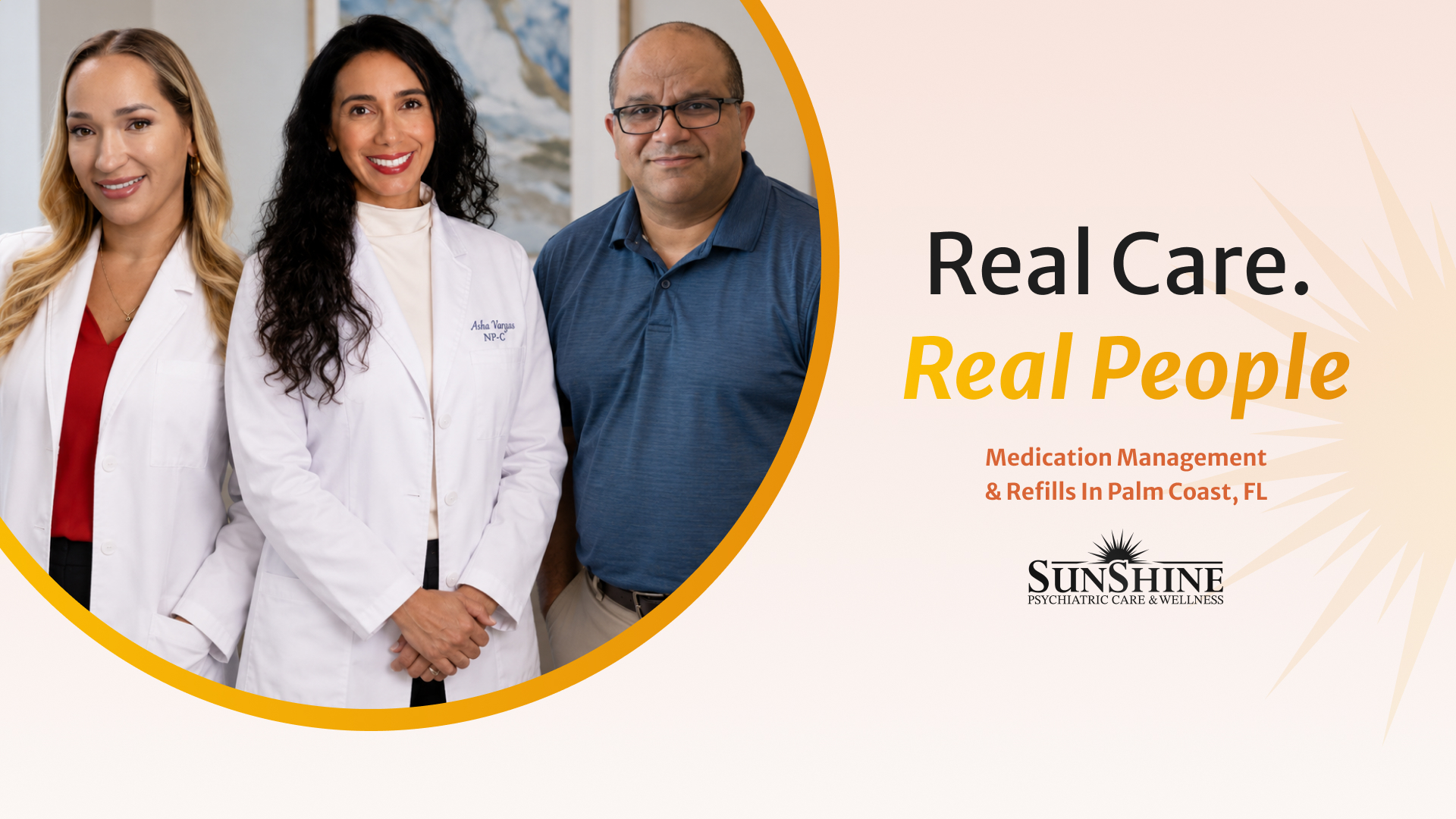
Rhonda Richardson, PMHNP-BC
I am a board-certified psychiatric-mental health nurse practitioner committed to providing individualized care through a holistic and person-centered approach.
We grow with you, guiding your journey to strength.