

Combining TMS and ketamine therapy for depression can be a highly effective strategy for patients with persistent or severe symptoms that have not eased with standard care. At our Palm Coast center, we deliver this pairing through NEURO RESET™. Our advanced treatment combines TMS and IV ketamine in a coordinated plan, leveraging ketamine’s rapid action to enhance brain flexibility, which TMS then reinforces through long-term neural network strengthening. This approach aims for faster, more significant, and longer-lasting improvement in mood.
Depression is a serious medical condition that changes how you feel, think, and handle daily activities. It is more than sadness and not a lack of effort. Persistent sadness, low energy, sleep disruption, and loss of interest are common, and symptoms must be present for at least two weeks for a diagnosis.
Effective depression treatment starts with your symptom pattern, history, and the treatments you have already tried
Many patients arrive after several medication trials or after partial relief that did not last
Transcranial Magnetic Stimulation (TMS) is a non-invasive, drug-free treatment that uses focused magnetic pulses to stimulate nerve cells in brain areas involved in mood. We provide Exomind TMS to target the prefrontal cortex, a region often underactive in depression, helping restore normal brain activity, communication between neural networks, and improved mood regulation. You stay awake and comfortable in a chair; there is no anesthesia.
A full course follows a 36-treatment protocol, with each session tailored to you
Over repeated visits, those pulses support activity in mood circuits that have been underactive
Relief tends to build across the course rather than in a single day
TMS is an FDA-cleared treatment for adults with major depressive disorder who have not found relief from at least one prior antidepressant medication. Adults who have not gained enough from traditional therapy are typical candidates, and we also use Exomind TMS when anxiety is part of the picture. A thorough Psychiatric Evaluation with Rhonda Richardson, our Psychiatric-Mental Health Nurse Practitioner (PMHNP), reviews your current psychiatric care status, medical history, and goals to determine whether TMS is appropriate for your plan.
One of the primary advantages of TMS is its safety profile. It is a drug-free, non-systemic treatment with minimal side effects, most of which are mild and temporary, such as scalp discomfort. There is no recovery downtime, and patients often return to work or family life after a session.
The 36-session protocol helps create lasting changes in brain function and gives care a clear arc
Exomind TMS does not add another daily pill and does not cause the side effects often associated with antidepressant medications
It can stand alone or sit inside a combination plan with ketamine
Ketamine is an interventional option for adults with severe or persistent mood symptoms and works differently from traditional antidepressants. Instead of focusing on serotonin or norepinephrine, it targets the brain’s glutamate system, which can trigger a rapid increase in neuroplasticity – the brain’s ability to form new connections and pathways. This “rewiring” can quickly alleviate depressive symptoms, sometimes within hours or days of the first treatment.
IV Ketamine Therapy is given in a clinical setting with medical monitoring and precise dosing
A structured evaluation comes first, and we watch your response during each visit
That different action is why it can help after standard medications have failed
Our center offers two forms of ketamine-based treatment – IV ketamine and Spravato, which are not the same.
IV Ketamine Therapy: An intravenous infusion with precise dose control and 100% bioavailability, delivered under continuous medical monitoring in our Palm Coast office
Spravato (Esketamine): An FDA-approved prescription nasal spray containing a form of ketamine; Spravato is self-administered in our office under supervision
Spravato is specifically indicated for adults with treatment-resistant depression or major depressive disorder with acute suicidal ideation or thoughts; both treatments are supervised on site
Candidates for IV ketamine therapy or Spravato are typically adults with severe or persistent mood symptoms who have not improved with traditional therapies and who pass medical screening. Not everyone qualifies. A comprehensive evaluation and safety review are required before any treatment to ensure it is appropriate and safe.
The most significant benefit of ketamine therapy is the speed at which it can work. For patients in acute distress, this rapid relief can be life-changing, and for some patients the timeline is faster than with many oral antidepressants. It offers a new mechanism of action that can be effective even when other medications have failed.
Visits are monitored on site
It provides a critical option for those with the most challenging forms of depression
Ketamine is one part of care; it is not a replacement for psychiatric follow-up
The core idea behind our combined TMS and ketamine treatment is synergy. We set one plan so that timing, monitoring, and goals stay aligned. Ketamine can shift glutamate signaling more quickly, providing a rapid antidepressant effect and “opening up” the brain to change, while TMS trains mood circuits over weeks to make those positive changes durable. Together they address depression from two directions.
Each method acts on a different part of the mood system
Standalone TMS and ketamine have each proven valuable; combining them offers a unique therapeutic advantage
Combination care fits when one method alone has not been enough, when symptoms are both severe and stubborn, or when patients need more than another oral antidepressant
Ketamine’s effect on neuroplasticity is like tilling soil that has become hard and compacted, creating fertile ground where new growth can happen. TMS then acts like planting seeds and watering them consistently over its 36-session course, strengthening and solidifying the new, healthier neural pathways that ketamine helped make possible. TMS targets brain areas that help regulate mood; ketamine acts on glutamate, a neurotransmitter that helps brain cells communicate, so patients may feel an earlier lift from ketamine, while TMS reinforces longer-term change.
Patients who are ideal candidates for our NEURO RESET™ program often include those with severe or long-standing treatment-resistant depression. Combination therapy may also fit people who had only a partial response to TMS or ketamine when used as standalone treatments. We already treat anxiety, PTSD, ADHD, and OCD; when those conditions accompany depression, a combined plan can still be considered after screening.
Your journey begins with a comprehensive evaluation with our provider, covering history, current symptoms, and prior treatments. If NEURO RESET™ is the right fit, a personalized treatment plan will be created so you will know the plan before combined visits begin. We track progress and adjust as needed.
A series of IV ketamine infusions is typically administered at the beginning of your TMS treatment course
The two therapies are scheduled on different days but timed to maximize synergistic effects
Some patients receive ketamine while TMS is underway; others complete a block of one therapy before adding the second
Ketamine sessions stay in a monitored setting; TMS visits are non-invasive and usually fit a regular day
Both TMS and ketamine treatments are administered in a clinical setting under direct medical supervision at our Palm Coast office. Combination care means more coordination, not less oversight. We monitor your progress closely to ensure treatment is effective and well-tolerated, making adjustments as needed. Your safety and comfort are our focus.
Combining TMS and ketamine therapy for depression represents a significant advancement in mental healthcare and gives patients a structured path when prescriptions and therapy have not been enough. Our proprietary NEURO RESET™ program harnesses the unique strengths of both treatments, offering rapid symptom relief and promoting long-term brain health for individuals in Palm Coast and beyond who are struggling with treatment-resistant depression. If you have found other treatments to be ineffective, this combined therapy may be the next step on your path to wellness.
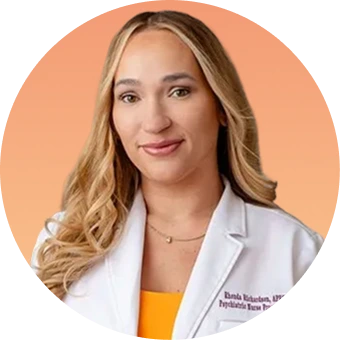
About the Author
Rhonda Richardson, PMHNP-BC